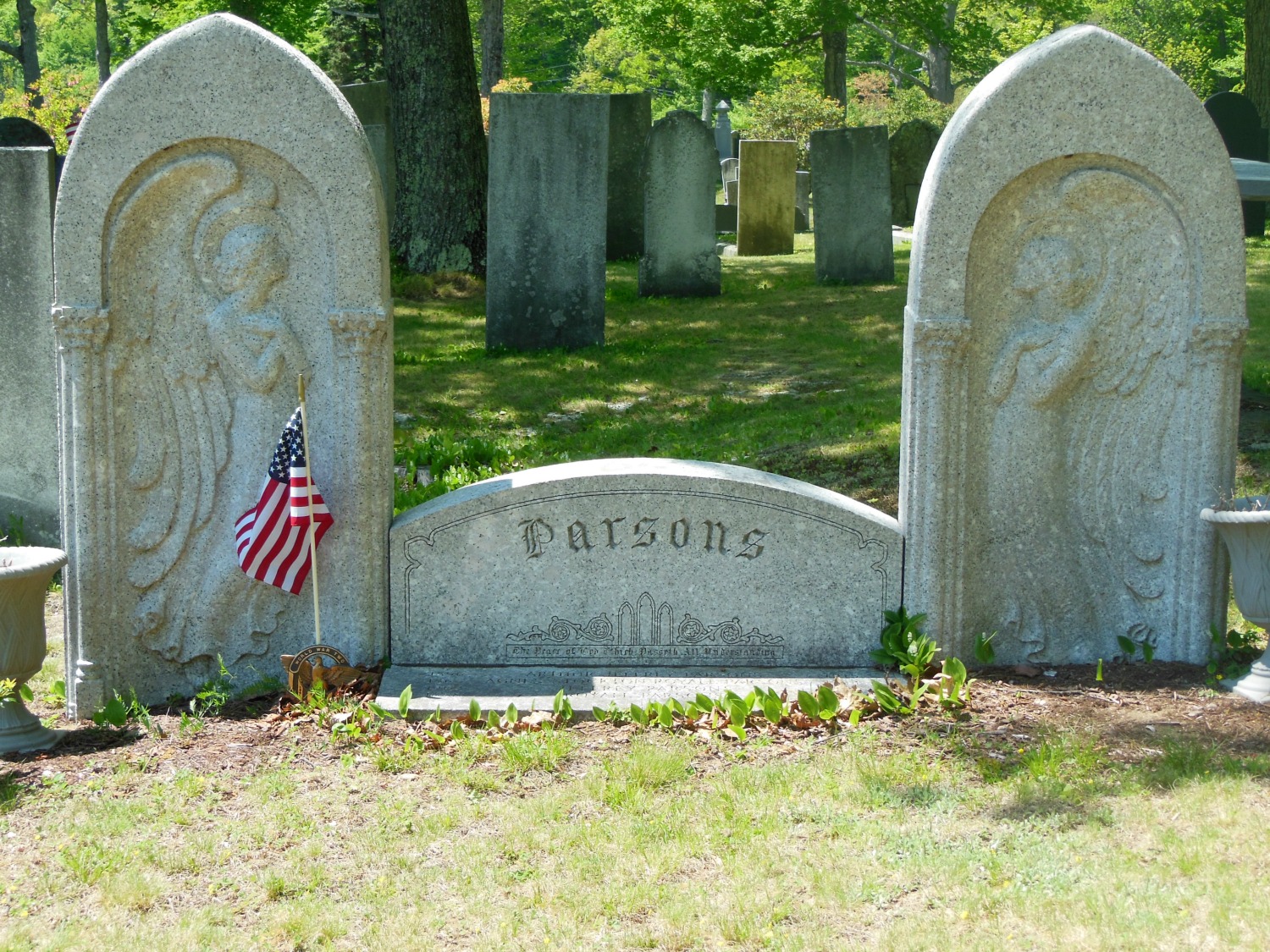
 Arthur Jeffrey Parsons (May 3, 1856 - November 5, 1915) was born on May 3, 1856, in Boston, Massachusetts, into a prominent and affluent New England family.
Queer Places:
1700 18th St NW, Washington, DC 20009, USA
Dublin Town Cemetery, Main St, Dublin, NH 03444, USA
Arthur Jeffrey Parsons (May 3, 1856 - November 5, 1915) was born on May 3, 1856, in Boston, Massachusetts, into a prominent and affluent New England family.
On June 1, 1887, he married Agnes Stockton Royall (1861–1934), a Washington D.C. society figure who later became a prominent American member of the Bahá'í Faith and a champion of race amity. The couple had three children (Royall, Georgiana, and Jeffrey).
Parsons lived for periods in Boston, Washington, D.C., and Dublin, New Hampshire. In Washington, D.C., he became deeply embedded in elite cultural and political circles. When the Library of Congress established its distinct Division of Prints in 1897, Parsons was appointed as its first Chief, playing a foundational role in organizing and expanding the national print and engraving collections (including managing major acquisitions like the Gardiner Greene Hubbard Collection). His Washington townhouse was a renowned salon-style gathering place for cabinet members, diplomats, artists, and authors.
He passed away on November 5, 1915, in Dublin, New Hampshire, leaving behind a valuable and celebrated collection of rare books and fine arts.
The Horace Walpole Society was established in Boston in October 1909 by a small group of avid American collectors, antiquarians, and scholars dedicated to the study of American decorative arts, architecture, and history.
Following its formal structural meetings in early 1910, the society expanded its core roster. Arthur Jeffrey Parsons was elected to membership in 1910, aligning himself with the country's premier connoisseurs of Americana and fine arts. He remained a member until his death in 1915.
Documentation regarding historical figures like Arthur Jeffrey Parsons often surfaces within specialized biographical projects mapping queer history and social networks (such as archival compilations documenting members of early-20th-century elite societies like the Horace Walpole Society).
While historical records note his marriage to Agnes Royall Parsons and their family life, biographical tracking of cultural elites from this period frequently highlights alternative social networks, homosocial club memberships, and nuanced domestic arrangements common among the turn-of-the-century intelligentsia, bridging public conventional milestones with broader queer historical mapping.
References:
Support this project
This website is a passion project researched, developed, and funded entirely by me. If you find the content valuable and would like to help support the ongoing research and hosting costs, any contribution is deeply appreciated.
Thank you for keeping this independent resource alive!
My books on Amazon: Elisa Rolle's books